
10 dazzling photos of Hanukkah in the Holy Land

The public display of hanukkiyot in Israel turns the Festival of Lights into a spectacle of sights.
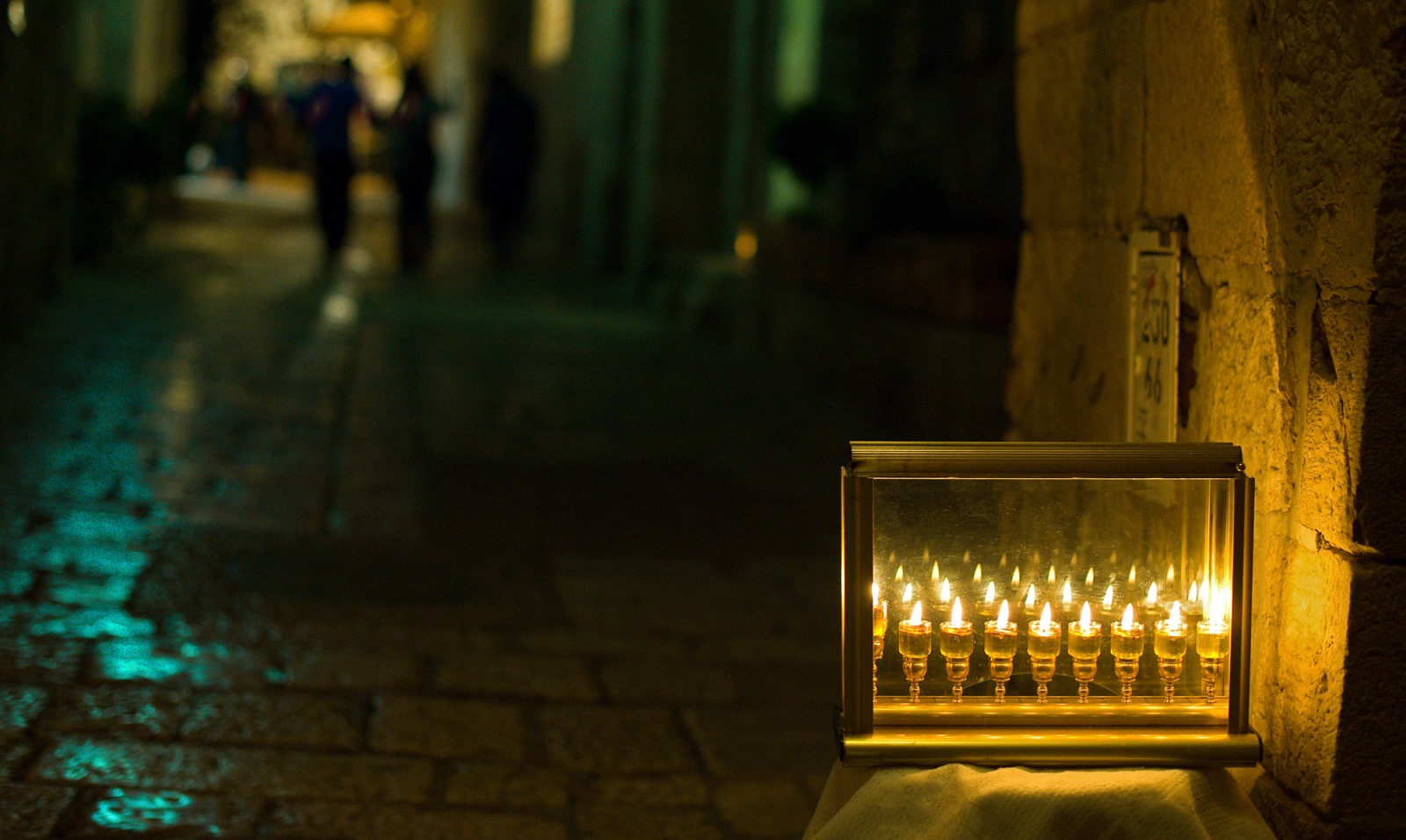
A menorah with lit candles is displayed in a glass case on a stone street at night, with a softly illuminated walkway and blurred figures in the background.
A main street through the Jewish Quarter of Jerusalem’s Old City, where a single menorah burns brightly on the eighth night of Hanukkah. Photo by Yehoshua Halevi

One of the unusual architectural features found in the outside walls of many Israeli homes is a small, glass-covered enclosure prominently located next to the front door.

Designed to shelter the interior from wind and rain, these peculiar stone cubicles lay idle most of the year, springing to life for exactly eight days beginning on the 25th of Kislev on the Jewish calendar, the first night of Hanukkah.

This year, the holiday in Israel began on December 7, and while celebrations are more muted because of the Israel-Gaza war, people across the country have seen great significance in a festival that celebrates light in the darkness.
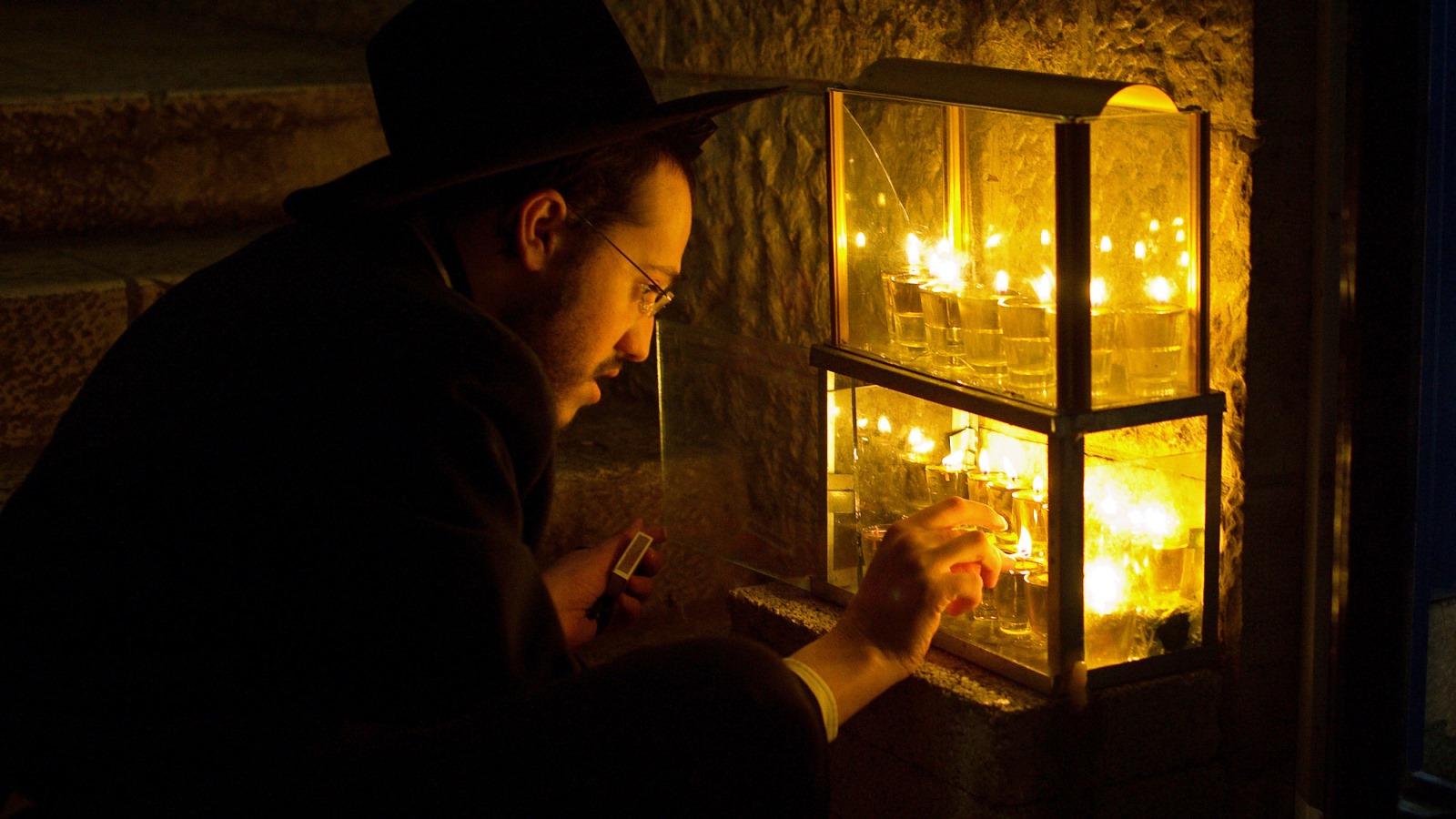
A man wearing a black hat and glasses is lighting candles of a menorah inside a glass case during a nighttime Hanukkah celebration. The candlelight illuminates their face and hand, creating a warm, intimate atmosphere.
A resident of Jerusalem’s Jewish Quarter lights a menorah on the eighth night of Hanukkah. Photo by Yehoshua Halevi

It’s an ideal location to place the menorah in adherence with the custom of pirsumay nisa, publicizing the Hanukkah miracle, when the oil burned for eight days instead of one during the rededication of the second Jewish temple in 165 BCE.

Three glass boxes containing lit menorahs with glowing candles are arranged on metal shelves against a dim, rustic background, creating a warm, reflective light.
Menorahs in protective glass housings outside a home in Jerusalem. Photo by Yehoshua Halevi

This custom is widely observed in Israel and Jewish communities around the world. For eight consecutive nights, the illuminated menorah (hanukkiyah) is placed at one’s doorstep, gate or inside a large picture window facing the street where it can be seen by passersby.
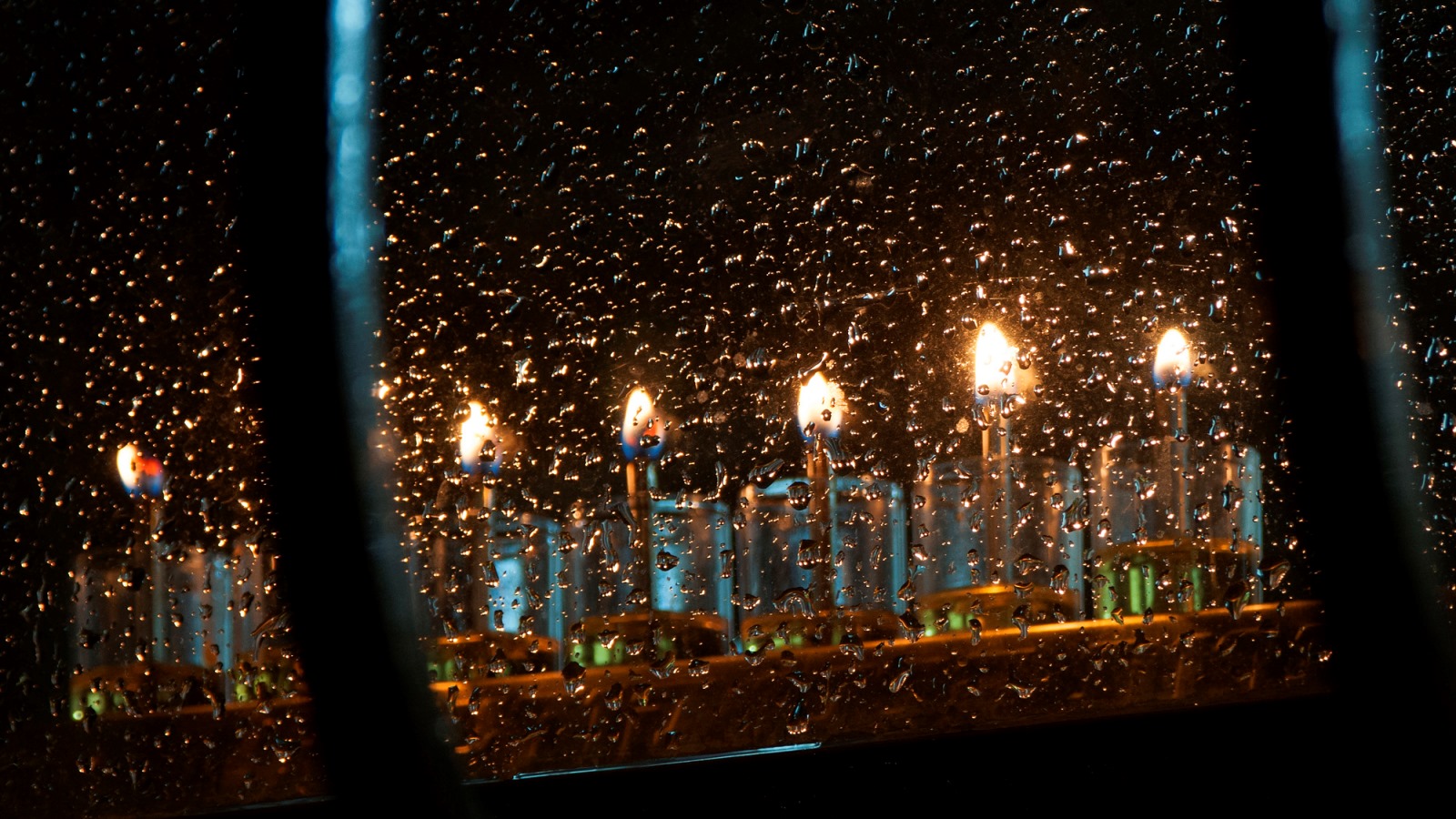
A menorah with candles burning brightly sits behind a rain-speckled window at night, with droplets of water on the glass reflecting the warm candlelight.
Hanukkah oil lamps burn brightly in a glass housing during a rainstorm in Jerusalem. Photo by Yehoshua Halevi

The public display of hanukkiyot turns the Festival of Light into a spectacle of sight. Many families have the custom of each member lighting his or her own menorah, and it is not uncommon to see seven or eight menorahs glowing brightly in a window or glass case outside the home.

The best places to view hanukkiyot are the observant neighborhoods beginning right after sundown, when most residents do the lighting ceremony.

An elderly woman and a young child gaze at a display of lit votive candles through a window, their faces softly illuminated by the warm candlelight.
A woman and child observe Hanukkah lights aglow in the front window. Photo by Yehoshua Halevi

In Jerusalem, the Jewish Quarter of the Old City, Mea She’arim, Geula and Nachla’ot are excellent destinations to view many unique hanukkiyot in full view to the public. The Jewish Quarter has become a popular destination for family fun on Hanukkah in Israel — especially on the eighth night, with some residents offering hot drinks, stories and explanations of their distinctive menorahs.
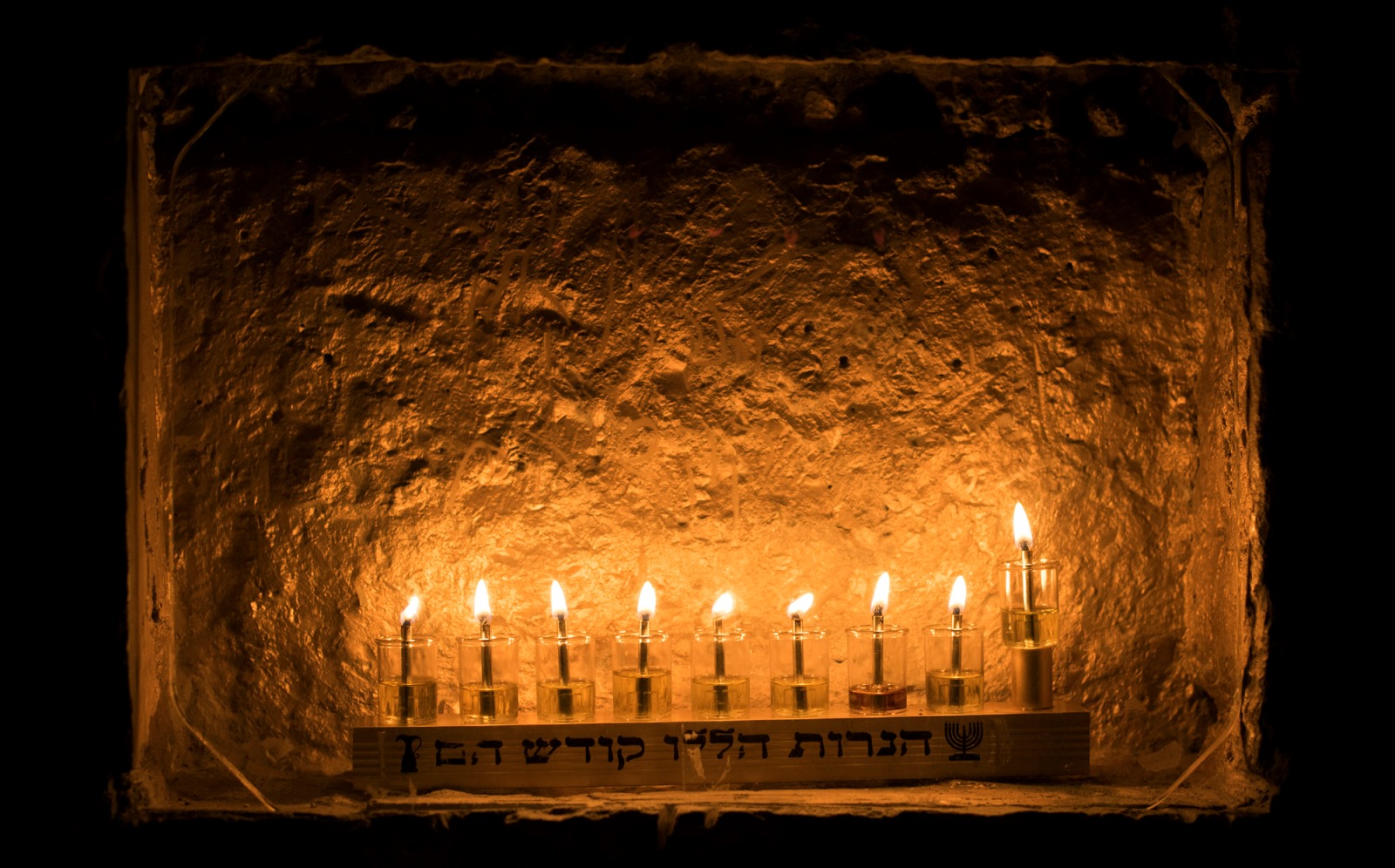
Nine lit candles in glass holders are arranged in a row on a small shelf against a textured, warm-toned wall. Hebrew text is visible on the shelf below the candles, which glow softly in the dim light.
An oil menorah sheltered in a stone cubicle outside a home in Jerusalem’s Old City. Photo by Yehoshua Halevi

For a more enlightening treat of the holiday’s visual delights, visit a hotel lobby where guests often light candles on a single table in the lobby and one can gaze at a dozen or more menorahs ablaze simultaneously.

A dimly lit, narrow stone alleyway at night is illuminated by a few lit menorah displayed outside of each of the buildings, reflecting light on the wet ground. The corridor leads to a doorway glowing with bluish-green light in the distance.
Water floods a street in the Jerusalem’s Old City during a downpour on the eighth night of Hanukkah. Photo by Yehoshua Halevi

A winter stroll is also likely to generate a little appetite, but not to worry. The metaphor of the oil outlasting its normal expectancy has seeped into other traditions of the holiday, such as eating Hanukkah foods fried in oil.

In Israel, donuts are not generally consumed year round, but on Hanukkah, bakers become artists of Hanukkah donuts and genially compete to see who can design the most colorful and scrumptious sufganiyot.

A hand decorates donuts with white glaze by piping chocolate icing in a swirl pattern. Several other decorated donuts are arranged closely on the table.
A baker applies the finishing touches to a freshly baked tray of donuts. Photo by Yehoshua Halevi

The quantity and variety of donuts are sure to please any palate and, along with the flickering oil lamps and candles, shed a little light and warmth on a long winter night.

Rows of decorated Israeli doughnuts, some topped with white icing and chocolate drizzle plus pastel heart picks, others dusted with powdered sugar and small yellow centers, are displayed closely together.
A wider variety of toppings and fillings has led to a surge in the donut’s popularity in Israel. Photo by Yehoshua Halevi
A close-up of a metallic spinning top with engraved markings on its disc, casting a shadow on a textured, light-colored surface. The top has a red tip and is illuminated by warm light.
The Hanukkah dreidel game features a spinning top with four Hebrew letters – nun, gimel, hey and pey – which stand for “a great miracle happened here.” Photo by Yehoshua Halevi